



Foundations
These guidelines define the core of the Network Depot identity: the verbal and visual principles, design standards, and practical rules that keep the brand clear and consistent across every touchpoint.
Inside, you’ll find guidance for logo, color, typography, gradient shapes, photography, voice, and brand applications, along with examples of how these elements work together.
Logo
The Network Depot logo is a custom ND monogram inspired by NASA’s balance of engineering precision and forward movement. Its connected form brings readiness and progress into one symbol.




Heritage lockup
A special-use lockup that recognizes Network Depot’s history. Reserve it for selected heritage, anniversary, or company-story applications; it should not replace the primary lockups in everyday communications.

Clearspace
Clear space protects the visibility and integrity of the Network Depot identity. Keep this area free from text, imagery, graphic elements, and page edges.
Symbol
The minimum clear space is equal to the height of the capital “N” in the wordmark, measured on every side.
Wordmark and lockups
The X shown in the following diagrams indicates the minimum clear space required around the symbol.
X
X
X
X


2X


Incorrect Usage
The Network Depot logo should always remain clear, consistent, and recognizable. Use only approved artwork and never alter its proportions, construction, or appearance.




Color
The Network Depot palette balances control with forward movement. Warm Black and Warm White create a dependable foundation, while Light Blue adds clarity and openness. The gradient introduces energy and progression across the system. Secondary colors are used sparingly to add contrast, depth, and emphasis.
Primary


Secondary
Neutral Palette
The extended neutral palette creates hierarchy without introducing unnecessary color. Warm Black and Dark Brown anchor the system, while four grey values support secondary text, dividers, backgrounds, and layered information.
UI Palette
UI colors communicate status, feedback, and priority across digital interfaces. Use them consistently for defined functional meanings, and always support color with clear text or icons so it is never the only signal.
Gradient Backgrounds
Gradient backgrounds extend the palette into atmospheric fields that add depth, energy, and movement. Use them for key brand moments, section breaks, and digital surfaces. Select backgrounds that support the content, maintain clear contrast, and keep text and marks away from visually active areas.



Create a gradient
Use the prompt below in ChatGPT to create additional gradient backgrounds. Select one approved palette and include only its HEX values. Do not mix colors between palettes. Review every result for smooth transitions, minimal texture, and overall consistency with the examples before use. AI-generated colors may require correction to match the approved values.
Create one abstract gradient background using exactly one approved palette. Blend the colors into broad, soft atmospheric fields with smooth transitions, one dominant light area, and one richer saturated area. Keep it minimal, organic, asymmetrical, airy, and subtly landscape-like, with blurred boundaries and gentle depth. Avoid radial glows, swirls, streaks, dark corners, hard shapes, texture, grain, and banding. Full bleed, high-resolution square image.Palette 01: #E56000, #E39D55, #E3B98FPalette 02: #D1CEB3, #8996D3, #8266C9Palette 03: #A2B785, #B7C9C1, #B9D2DAPalette 04: #EE4D00, #FF9143, #FFB250Palette 05: #B8D3E3, #E4D4AE, #DCDF9E, #AEA3B8Palette 06: #7192A5, #91A18B, #CAD9D9Palette 07: #E5D3BF, #E4C7A5, #E36E01Palette 08: #FEC800, #FE6801, #691305Palette 09: #D38D8D, #897DA9, #0170BCPalette 10: #F3D1A6, #F0A34D, #E9812B
Color in Use

How governed systems turn AI into real business value
networkdepot.us
Jordan Blake
Chief Technology Officer
2026 Business Technology Summit
Washington, D.C


Typography
Typography plays an important role in the Network Depot identity system. We pair the clarity and precision of Die Grotesk A with the warmth and humanity of Caslon Ionic, creating a system that feels trusted, accessible, and ready for what comes next.
Caslon Ionic Regular
Caslon Ionic Regular is our headline typeface. Its expressive serif forms bring warmth, character, and humanity to the identity, balancing the precision of the wider system. To maintain a consistent voice, it is used in Regular for headlines and key statements.
Die Grotesk A
Die Grotesk A is our body typeface. Its clean construction and controlled proportions keep information clear, direct, and accessible across a range of sizes. Regular is the default weight for body copy, while Medium is used selectively to create emphasis and hierarchy.
Typographic roles
The type system assigns a clear function to each style. Caslon Ionic Regular is used primarily for headlines and, in selected applications, for body copy. Die Grotesk A supports body copy, captions, and functional information. Follow the specified size, line height, and letter spacing to maintain consistency.
Type scale
The type scale creates consistent hierarchy across every application. Use H1 to H3 for headlines, large to small text styles for supporting copy, and the eyebrow style for labels. Use the defined levels without introducing additional sizes.
Layout System
Network Depot layouts are sparse, poster-like compositions built around one dominant idea: a headline and image, a centered graphic, or a single data point. Headlines sit at the top or upper left, while supporting copy and brand marks are anchored near the lower edge. The grid defines shared edges and central axes, but not every column needs to be filled. Large areas of negative space keep the hierarchy clear and give each focal element room to lead.

Ready first.
Network Depot
Managed
Intelligence
August 2026


67.2
Significantly less data lost since the company purchased our yearly program.
Ready first.
Network Depot helps organizations prepare for what’s next by building the right foundation.
Network Depot

Build the reliable technology foundation your business depends on.
AI has a step zero.
Step Zero
Network Depot helps organizations prepare for what’s next by building the right foundation.
One step ahead
Network Depot helps organizations prepare for what’s next by building the right foundation.
Permission
Network Depot helps organizations prepare for what’s next by building the right foundation.
Network Depot
Compact editorial compositions
Use the six-column grid to organize the brand identifier, introductory copy, and supporting modules. Content modules can vary in number and width, but their icons, headings, and descriptions should align consistently. Maintain clear margins, gutters, and enough open space to separate each level of information.

1991→
Before intelligence can create value, your business needs the right systems, safeguards, and structure in place.

One step ahead
Network Depot helps organizations prepare for what’s next by building the right foundation.

Step Zero
Network Depot helps organizations prepare for what’s next by building the right foundation.

Permission
Network Depot helps organizations prepare for what’s next by building the right foundation.
1991→
Before intelligence can create value, your business needs the right systems, safeguards, and structure in place.
One step ahead
Network Depot helps organizations prepare for what’s next by building the right foundation.
Step Zero
Network Depot helps organizations prepare for what’s next by building the right foundation.
Permission
Network Depot helps organizations prepare for what’s next by building the right foundation.
Wide compositions
Use the 12-column grid to balance a large headline with smaller supporting elements. The headline can span several upper columns, while the URL, logo, and information blocks align to separate grid areas around the edges. Keep related details at the same text size and leave open space between content groups.
How governed systems turn AI into real business value
networkdepot.us
Jordan Blake
Chief Technology Officer
2026 Business Technology Summit
Washington, D.C
How governed systems turn AI into real business value
networkdepot.us
Jordan Blake
Chief Technology Officer
2026 Business Technology Summit
Washington, D.C

Social media
- Clear Messages: Use short, direct headlines as the main focus of each post.
- Varied Content: Alternate between typography, photography and simple graphic elements to keep the feed balanced.
- Controlled Color: Use gradients and accent Colors selectively, supported by neutral backgrounds and clear brand elements.
network_depot

Managed IT Services
networkdepot.com
network_depot

Trusted enough to run the infrastructure.
networkdepot.com
network_depot

Govern
networkdepot.com
Illustrations
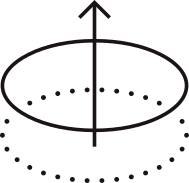
The Network Depot illustration system draws from technical space diagrams, orbital paths and system maps. Precise lines, dotted trajectories, and controlled geometry translate complex ideas into clear visual signals.

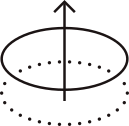
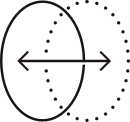

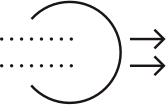
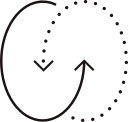
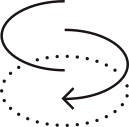
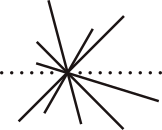
Building illustrations
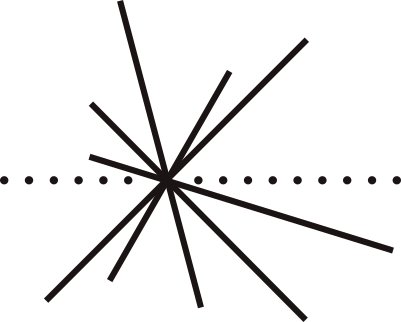
Build each illustration from a limited set of elements: solid and dotted circles, ellipses, straight paths, and simple arrows. Begin with one dominant form, then add only what is needed to communicate movement, direction, connection, or control. Elements may overlap, rotate, or intersect, but stroke weight, dot spacing, arrow construction, and scale should remain consistent. Keep compositions open and avoid fills, shading, decorative detail, or complex geometry.








Illustration Weight
Illustration strokes should generally align with the stroke of the Caslon Ionic headline used beside them. Match the weight optically rather than through exact numerical measurement.
Exception: When an illustration is intended to create greater visual impact, it may use a heavier stroke and does not need to align with the type. The final weight is determined by the designer based on the illustration’s role and the overall composition.
Activate

Advance

Gradient Shapes
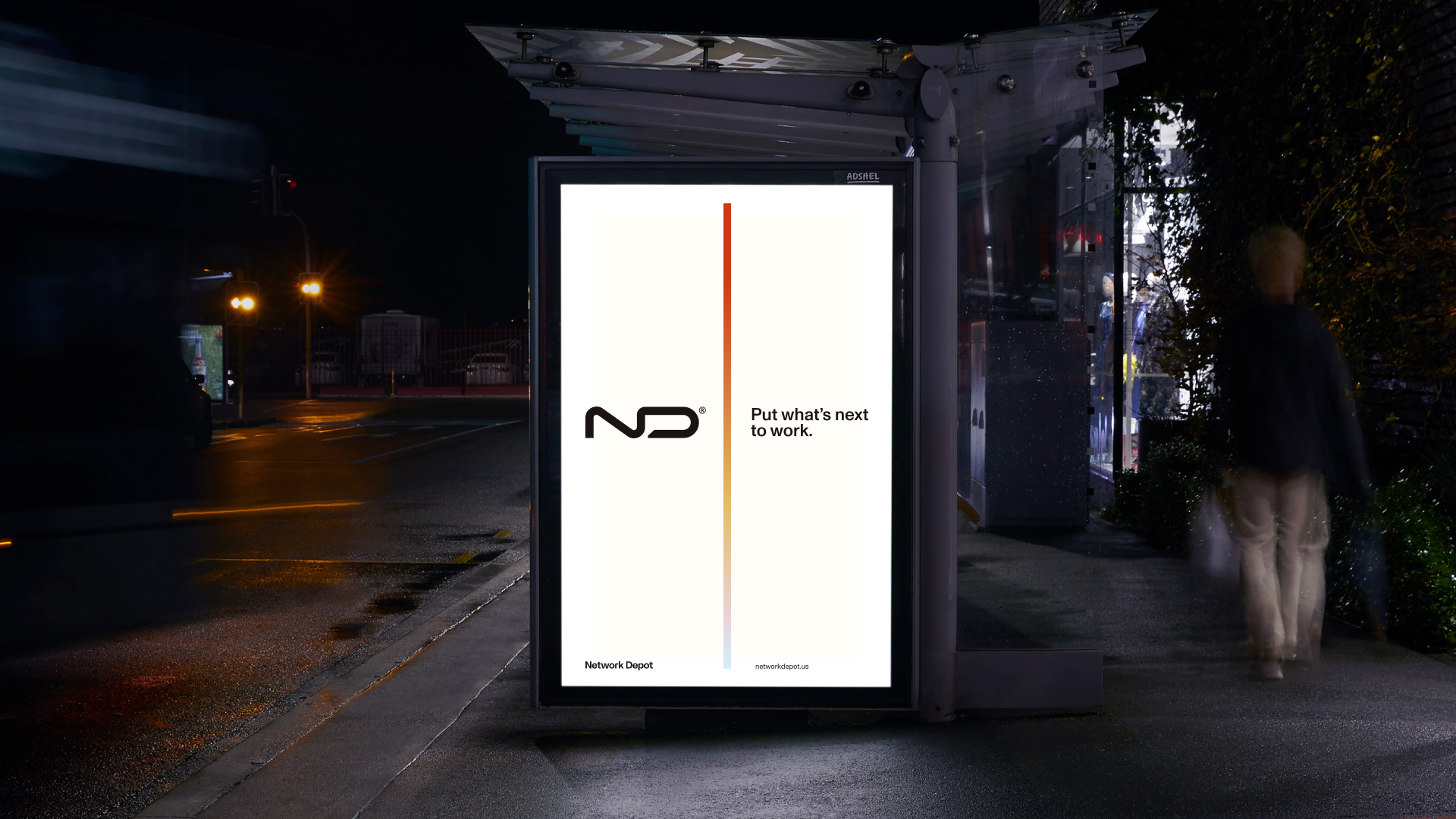
The gradient shape system uses two core forms: a line and a circle. Applied as restrained graphic accents, they introduce focus, movement, and continuity across the identity.

Layouts
Across digital and editorial applications, gradient shapes create hierarchy, guide attention, and organize information. Use the line as a divider or anchor, and the circle to frame data or emphasize key content. Keep each form restrained, purposeful, and aligned to the grid.
Building the foundation for practical AI.

Prepare your systems, govern your data, and put AI to work, without losing control.
Book a Call
Learn more
What is Managed Compliance?
Christopher Boyd
August 2026


67.2
Significantly less data lost since the company purchased our yearly program.
AI has a step zero.

Step Zero
Network Depot helps organizations prepare for what’s next by building the right foundation.
Оne step ahead
Network Depot helps organizations prepare for what’s next by building the right foundation.
Permission
Network Depot helps organizations prepare for what’s next by building the right foundation.

Network Depot
Gradient Shapes in Use
Gradient shapes create continuity across the identity system, adapting to digital, editorial, environmental, and campaign applications. Their scale and function may change, but they should always remain purposeful, restrained, and aligned to the composition.
Digital Interface
The Digital Interface is the main asset for Network Depot visual communication. This asset uses all the system logic and elements. Below you can find some examples to start with.
Buttons
Buttons use a clear hierarchy to guide action across digital interfaces. Primary buttons carry the main action, while secondary buttons support alternative paths. The glow treatment may be used as a special hover state to add emphasis and signal interactivity.
Loading and Progress States
Loading and progress states use the gradient circle to make system activity visible without adding unnecessary complexity. Use simple, continuous motion and pair it with a concise status message so the element remains functional rather than decorative.
9:41•••
Loading...
Build functional data systems without losing control.


Service Cards
This example shows how illustration, gradient, typography, and interaction can work together within a digital service card. The illustration introduces the theme, while a clear content hierarchy and single action keep the experience focused.

Advance
Connect systems, data, and AI tools to create deeper visibility across the organization, turning information into smarter decisions, advanced automation, and practical business intelligence.
Text and Image Block
Governance, built in.
Put permissions, controls, and accountability into the systems your business uses every day.
Testimonial Card
Read Case Study ↗
“We are grateful to have a partner in Network Depot, an organization that provides excellent IT and customer service.”
Susan S
Cao of Transform Care
Photo Direction
Network Depot photography balances human capability with a sense of scale and possibility. Imagery should feel intentional, credible, and forward-looking, never staged, generic, or overtly science-fiction.

People at Work
Show the people behind modern work and communicate confidence, capability, and genuine human connection.
Visuals
Favor candid portraits, focused activity, collaboration, natural expressions, and close observational details. Technology should appear as part of the work rather than the main subject.
Production
Use authentic workplaces, varied perspectives, directional natural light, and warm, restrained color grading. Avoid staged corporate poses, artificial enthusiasm, and generic device-focused imagery.





Cosmic Imagery
Cosmic imagery uses planets, star fields, eclipses, nebulae, and other recognizable celestial phenomena to express scale, exploration, discovery, and forward movement.
Visuals
Use planets, star fields, and celestial phenomena to communicate scale, exploration, and forward movement.
Production
Favor dramatic black space, isolated subjects, detailed astronomical imagery, and controlled warm and cool highlights. Avoid fantasy composites, astronauts, rockets, and overt science-fiction clichés.



Photography to avoid
Avoid imagery that feels staged, generic, overly literal, or futuristic for its own sake. Photography should support trust, real work, and forward movement without relying on familiar corporate or science-fiction clichés.
- Staged corporate poses and artificial expressions
- Generic device-focused stock photography
- Rockets and astronauts
- Fantasy composites and overt science-fiction imagery
- Distracting effects or excessively artificial color grading








Brand Applications
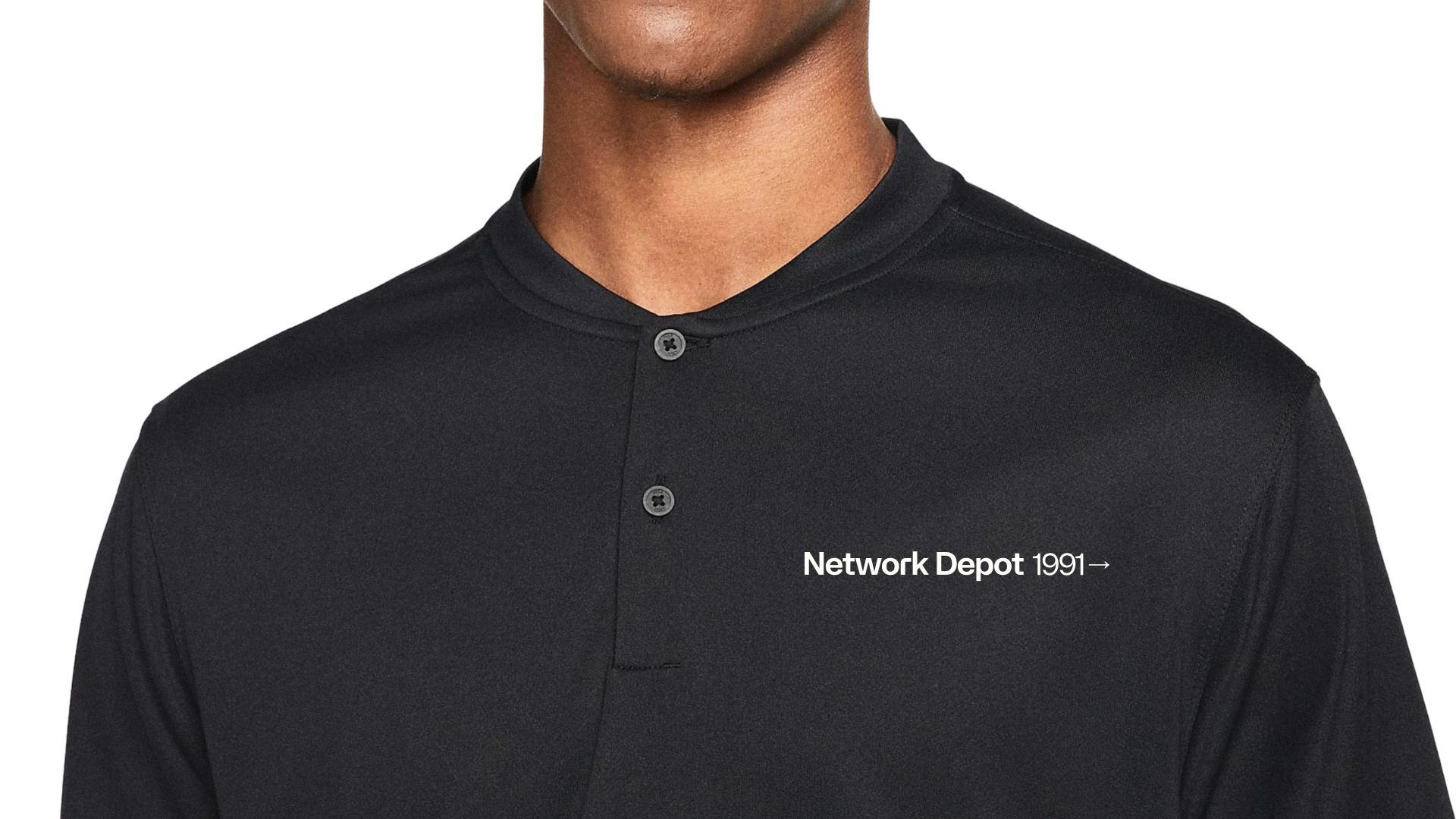
Brand applications bring the Network Depot identity to life across touchpoints, combining its core elements with clarity and restraint, creating a consistent system that adapts without losing recognition.






Verbal Identity
Network Depot helps organizations adopt new technology without losing control. We build the operational foundation, turn governance into working safeguards, and activate AI and intelligence around real business needs.
Go to full document
The Network Depot method
New technology creates value only when the business is ready to use it. Network Depot guides clients through four connected phases, from running the environment to putting intelligence into daily work. Each phase builds on the last, with one accountable partner throughout.
Tone of Voice
Assured
Decisive, calm, and credible.
Sounds like
- Readiness before rollout
- Structure before automation
- Foundations before experimentation
Avoid
- Grandstanding
- Inflated claims
- Absolutes that overpromise
Practical
Grounded in real work, not abstraction.The tone should make complex things feel understandable and useful.
Sounds like
- Clear, direct explanations
- Concrete outcomes
- Real-world language
Avoid
- Theoretical language
- Buzzwords without explanation
- Empty innovation talk
Progressive
Forward-looking and prepared, without sounding trend-chasing. Network Depot should feel current, curious, and ahead of the curve.
Sounds like
- Thoughtful about what is next
- Comfortable with change
- Interested in practical future use
Avoid
- Hype
- Futurism for its own sake
- Breathless excitement
Candid
Honest and clear-eyed. We speak openly about risks, limitations, and the work required.
Sounds like
- Straightforward explanation
- Useful caution
- Clear tradeoffs
Avoid
- Fear tactics
- Alarmism
- Sugarcoating
Tell the client what happened.
Say
“We give people and approved tools access to the information they need for the job. We keep the rest out of reach.”
Avoid
“We manage identities, devices, permissions, applications, and data.”
Start with the incident.
Name the person.
Show the result.
Use the technical term when it helps.
Core Story Formats
One-Liner
Network Depot helps organizations prepare, govern, and activate the systems that make AI, compliance, and modern work usable in the real world.
Short Description
Network Depot goes beyond managed IT to help organizations build the right foundation for what comes next. From modern workplace infrastructure to data governance to AI activation, they help clients put new technology to work, securely and practically.
Medium Description
Network Depot helps organizations modernize their technology environment, govern access and data, and activate intelligence in ways that support real work. Their approach starts with the systems underneath the business (cloud, devices, permissions, policies, and compliance), and extends into the tools and workflows that make AI useful. The result is not just better-managed technology, but a business that is more ready for what comes next.
Long Description
Network Depot helps your organization put what's next to work. Our role begins with the operational foundation: modern workplace infrastructure, cloud systems, standardized environments, and the day-to-day technology support your business relies on. From there, we help govern the environment: establishing permissions, data controls, policy enforcement, and compliance safeguards that make modern tools safe to use. Once that foundation is in place, we help activate intelligence across your business through AI tools, workflows, automations, and more advanced business intelligence systems. In a market where many providers still sound the same, Network Depot's value is not just in keeping systems running. It is in helping your organization move forward with confidence and a strategic edge.
Final Expression
Sounds like
Readiness is the edge.
Core Story
Network Depot helps organizations prepare for what’s next by building the right foundation, putting governance into practice, and activating intelligence where it matters. In a world rushing toward AI, they make sure the environment is ready first, so clients can move forward with confidence and a strategic edge.
Closing Line
Put what’s next to work.